Most people who smoke want to stop, and most have tried before. That is not a sign you cannot do it. It is a sign that quitting is a skill, and skills get easier with the right plan. People who quit successfully rarely rely on willpower alone. They prepare, they use support that is proven to work, and they know what the hard moments will look like before they arrive.
This guide brings that together into seven steps. Each one links to a deeper article if you want the detail.
Step 1: Get clear on why you are quitting
Motivation fades on day three. Reasons you have written down do not. Before you set a date, write a short list of the reasons that matter to you. Be specific. "Be healthier" is easy to ignore at 11pm. "Run around with my kids without stopping to catch my breath" is not.
Useful reasons tend to fall into four groups: health, money, the people around you, and control. If money is one of yours, our quit smoking savings calculator will show you exactly what you stand to keep. If health is one, read what happens to your body when you quit. Most people are surprised by how quickly the changes start.
Step 2: Set a quit date
Pick a date within the next two weeks. That is close enough to keep your motivation high and far enough away to prepare. Choose a day that is likely to be calm and routine. A busy Monday at work or a big night out is a poor first day.
Most experts now recommend stopping completely on your quit date rather than cutting down slowly. A 2016 trial published in the Annals of Internal Medicine found that people who stopped abruptly were more likely to still be smoke free at four weeks than those who reduced gradually.
Remove every cigarette, lighter and ashtray from your home, car and bags. Tell one person you trust. Saying it out loud makes the commitment real.
Step 3: Choose your support
This is the single biggest decision you will make, and the evidence is clear: any proven support beats going it alone. In the UK, your local NHS stop smoking service is free and offers expert advice alongside stop smoking aids. The main options are:
| Option | How it helps | Good to know |
|---|---|---|
| Combination NRT | A patch for steady nicotine plus gum, lozenge or spray for cravings | Works better than a single product |
| Varenicline | Prescription tablet that reduces cravings and the reward from smoking | Ask your GP or pharmacist |
| Nicotine vapes | Delivers nicotine without burning tobacco | Strong evidence for quitting |
| Cold turkey | No aids, relies on planning and behaviour change | Works for some, lowest success rate overall |
We compare these in detail in NRT vs cold turkey: what the research says, and look at e-cigarettes honestly in vaping vs smoking. Whatever you choose, pair it with behavioural support. That is where the biggest gains come from.
Step 4: Plan for your triggers
A trigger is anything that makes you reach for a cigarette without thinking. Most people have three or four big ones that account for most of the cigarettes they smoke. Name yours now and decide in advance what you will do instead.
First thing in the morning
Get straight up, drink a glass of cold water and shower. Change the order of your routine for the first week.
With coffee
Change the ritual. A different mug, a different seat, or switch to tea for a few days.
After meals
Brush your teeth or chew gum the moment you finish eating, then get up from the table.
Stress at work
Step outside anyway, but breathe instead: in for four, hold for four, out for six.
Alcohol
Alcohol is one of the strongest relapse triggers. Avoid it for the first two weeks if you can.
Driving
Keep sugar-free gum or a bottle of water in the car and change your usual playlist.
Step 5: Get through the first 72 hours
Nicotine leaves your body quickly, and withdrawal usually builds through the first day, intensifies on the second and peaks around the third. Irritability, restlessness, poor concentration, hunger and broken sleep are all normal. They are signs your brain is recalibrating, not signs that something is wrong.
Plan these days carefully: keep them simple, structured and busy, and line up your support before you need it. Our 3-day rule plan breaks the hardest days down hour by hour, and the nicotine withdrawal timeline shows what to expect from the first hour to the first month.
Step 6: Beat cravings in the moment
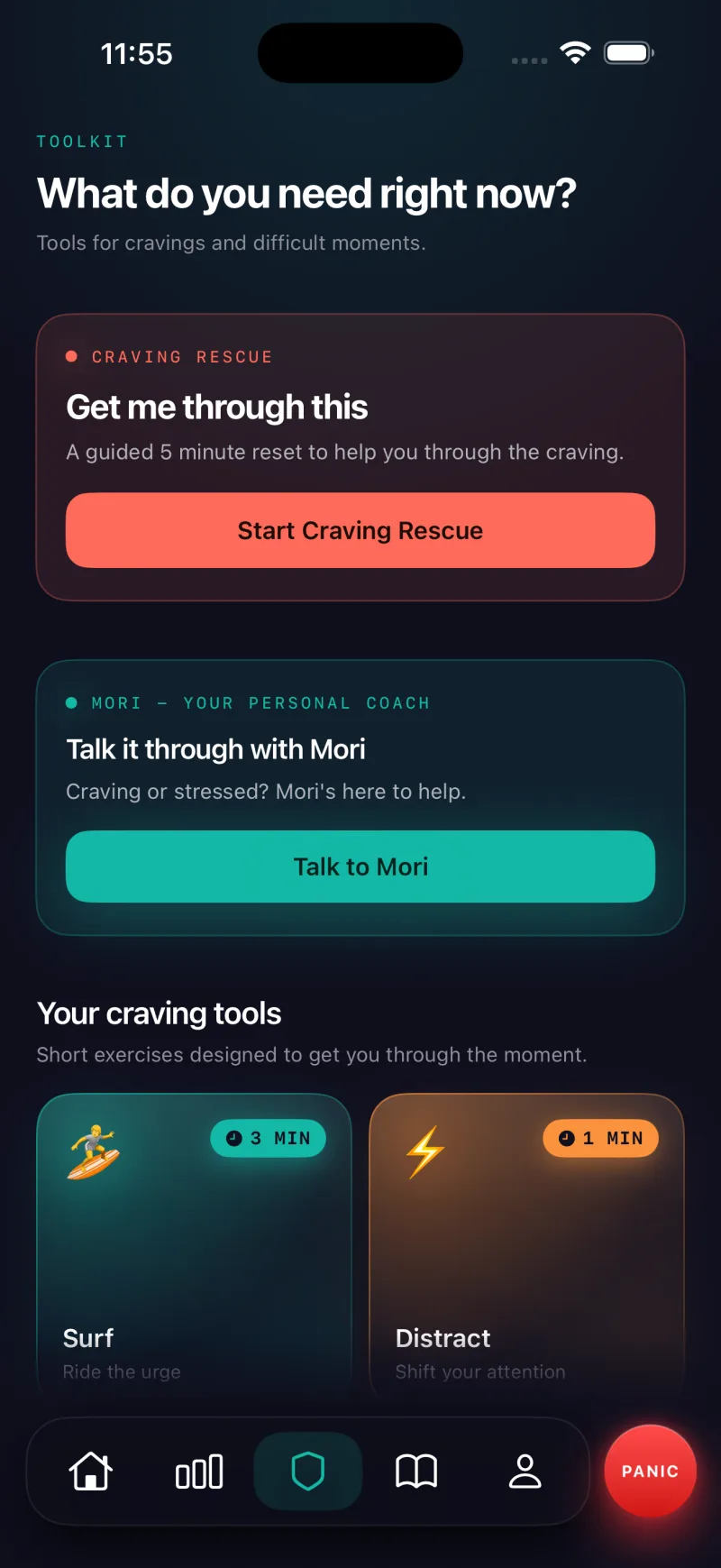
This is where most quit attempts are won or lost. The good news is that a craving is short. It rises, peaks and fades in a few minutes whether you smoke or not, and every craving you ride out makes the next one weaker. You never have to resist for a whole day. You only have to get through the next few minutes.
- Name it. Tell yourself: "This is a craving. It will pass in a few minutes."
- Breathe slowly. Four slow breaths, longer out than in, calm the stress response that makes cravings feel urgent.
- Move or distract. Walk, drink cold water, text someone, or do anything that occupies your hands and attention.
- Delay. Promise yourself five more minutes. By then, the peak has usually passed.
The science behind this is in why cravings only last 3 minutes.
Step 7: Protect your quit for the long term
After the first month, physical withdrawal is mostly behind you. What remains are habits, situations and emotions that used to come with a cigarette. A few things are worth preparing for:
- Weight. Some weight gain is common and manageable. See weight gain after quitting smoking for what is normal and how to limit it.
- Mood and stress. Anxiety can rise briefly, then usually ends up lower than before you quit. Read quitting smoking and anxiety.
- Sleep. Sleep often gets worse for a week before it gets much better. Here is how your sleep changes week by week.
- Progress. Keep your reasons visible and track what you are gaining, from money to health milestones. Seeing progress is one of the best defences against "just one".
What to do if you slip
A slip is one or two cigarettes. A relapse is going back to smoking as before. They are not the same thing, and a slip only becomes a relapse if you treat it as failure. If you smoke, do not throw the plan away. Work out what triggered it, adjust your plan for next time, and carry on from your next decision. Many people who quit for good had several attempts first. Each one teaches you something.
You do not need to feel ready forever. You need a plan for today, support for the hard moments, and the next five minutes. Everything else gets easier with time.
Frequently Asked Questions
What is the most effective way to quit smoking?
Combining a stop smoking aid with behavioural support. Combination NRT, varenicline and nicotine vapes all improve your chances, and using them alongside expert support from a stop smoking service makes you around three times more likely to quit than going it alone.
Is it better to quit cold turkey or cut down?
For most people, setting a quit date and stopping completely works better than cutting down gradually. You can still use NRT or a vape from day one to take the edge off withdrawal.
How long does it take to stop craving cigarettes?
Cravings are strongest in the first week and usually become much less frequent after two to four weeks. Occasional cravings can appear for months in specific situations, but they get shorter and weaker over time.
What happens to your body when you stop smoking?
Within 20 minutes your heart rate starts to fall. Within a day carbon monoxide has cleared from your blood. Within weeks circulation and breathing improve, and after a year your risk of heart disease is around half that of a smoker.
This article is general information, not medical advice. Nicotine replacement and stop smoking services can significantly improve your chances of quitting. In the UK, free support is available through the NHS. Speak to your GP or pharmacist about what's right for you.