Ask people why they smoke and "it helps me relax" is near the top of the list. So it makes sense to worry that quitting will leave you more stressed and anxious. In the first few weeks, it can. But the longer-term picture is clear and encouraging: people who stop smoking usually end up less anxious than they were while smoking.
Why smoking feels calming
Nicotine leaves your body quickly. Between cigarettes, levels fall and mild withdrawal sets in: restlessness, irritability and tension. Smoking the next cigarette relieves that withdrawal, which feels like relief from stress. In reality, much of the stress being relieved was caused by the previous cigarette wearing off.
Smoking does not remove the stress of daily life. It mostly relieves the withdrawal that smoking creates, over and over, many times a day.
Does quitting smoking cause anxiety?
In the short term, it can. Anxiety, irritability and low mood are common withdrawal symptoms. They usually build over the first few days, peak in the first week or two, and then ease. Knowing this in advance makes a big difference, because it stops you mistaking a temporary symptom for a permanent change. Our nicotine withdrawal timeline shows when each symptom tends to appear and fade.
Restlessness and tension rise
Nicotine levels fall and your brain notices. Irritability and anxious feelings are common and normal.
Anxiety is usually at its strongest
This is the hardest stretch for mood. Structure, sleep, movement and support help most here.
Symptoms start to settle
For most people anxiety falls steadily as the brain adjusts to life without nicotine.
Often lower than before you quit
Without the constant cycle of withdrawal and relief, many people feel calmer than they did while smoking.
What the research says
A review of 26 studies published in the BMJ in 2014, and a larger Cochrane review in 2021, found that stopping smoking is linked with lower anxiety, depression and stress, and with better mood and quality of life. The improvement was seen in people with and without existing mental health conditions, and in some studies it was as large as the effect of antidepressant treatment for anxiety and depression.
How to cope with anxiety while quitting
Slow your breathing
Breathe in for four, hold for four, and out for six. A longer out-breath calms your nervous system within a minute or two.
Use a stop smoking aid
NRT, varenicline or a nicotine vape reduce the intensity of withdrawal, including anxiety.
Cut back on caffeine
Without nicotine, caffeine stays in your system longer and can make you jittery. Try halving it for a few weeks.
Move your body
Exercise lowers stress hormones and improves mood, and even a short walk can take the edge off a craving.
Protect your sleep
Tiredness makes anxiety and cravings louder. Read how your sleep changes after quitting.
Talk to someone
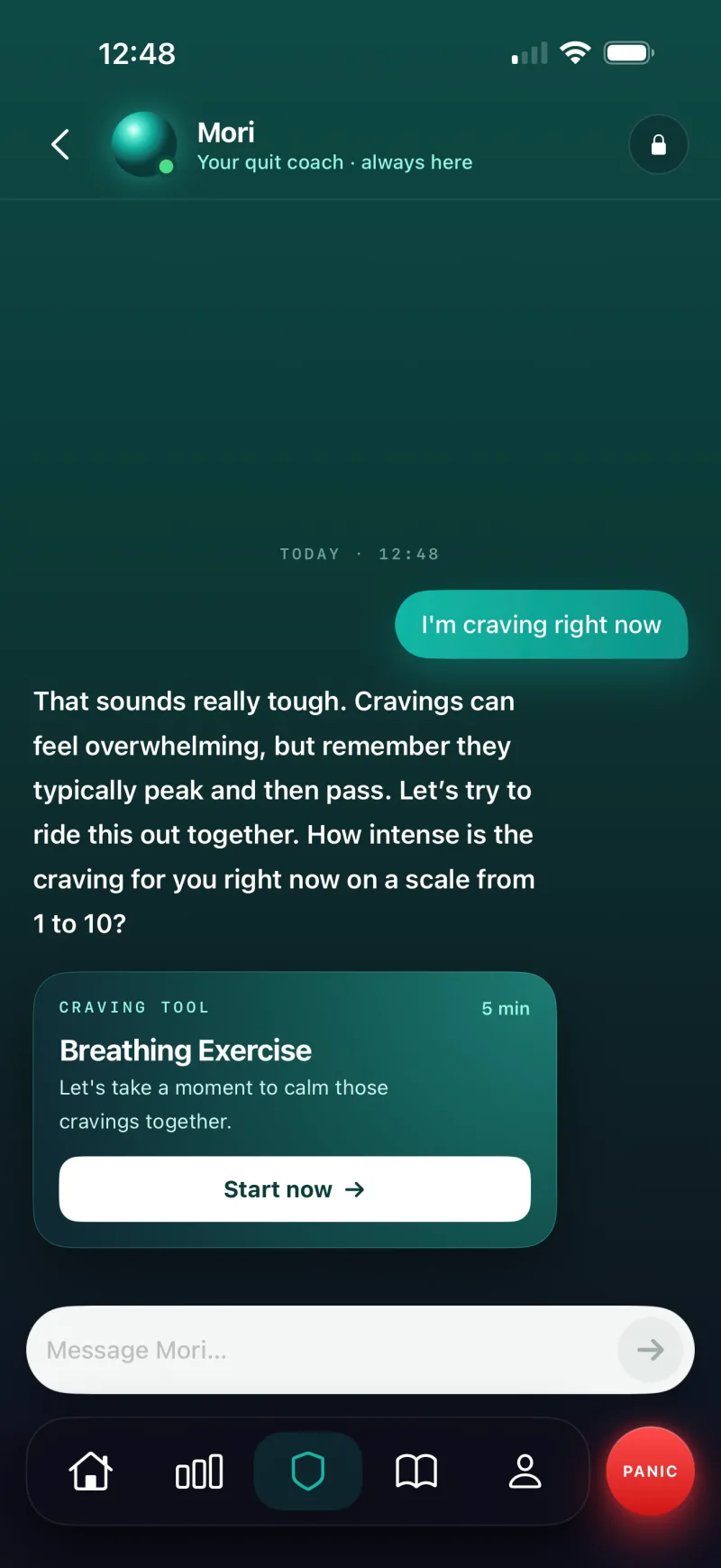
Saying how you feel out loud reduces its grip. A friend, a stop smoking adviser or a coach all help.
If you have an anxiety disorder or depression
You can still quit, and you may benefit the most. If you take medication for your mental health, talk to your GP before you stop smoking, because smoking changes how some medicines are processed and your dose may need reviewing. With the right support, people with anxiety and depression quit successfully every day. For the full plan, see our step-by-step guide to quitting smoking.
Frequently Asked Questions
How long does anxiety last after quitting smoking?
Withdrawal-related anxiety usually peaks in the first one to two weeks and eases over two to four weeks. For many people it then falls below the level they felt while smoking.
Does nicotine help with anxiety?
It feels like it does, because it relieves the withdrawal caused by the last cigarette. Over time, smoking is linked with higher anxiety, and stopping is linked with lower anxiety.
Can quitting smoking cause panic attacks?
Some people feel more anxious in the first weeks, and anyone prone to panic attacks may notice them more. Slow breathing, a stop smoking aid and talking to your GP can all help.
This article is general information, not medical advice. Nicotine replacement and stop smoking services can significantly improve your chances of quitting. In the UK, free support is available through the NHS. Speak to your GP or pharmacist about what's right for you.