Most people who try to quit smoking do so without understanding the biological reality of withdrawal. They feel a wave of anxiety at hour four, a crushing headache at hour twelve, and conclude they simply "can't" quit. But they were never failing — they were just uninformed. Knowing what withdrawal looks like, hour by hour, is one of the most powerful tools in your quit arsenal.
Nicotine withdrawal symptoms typically peak between 48–72 hours after your last cigarette and become significantly more manageable within 7 days. The timeline is predictable — which means you can plan around it.
Why Withdrawal Happens
Nicotine binds to acetylcholine receptors in the brain, triggering the release of dopamine — the brain's reward chemical. Over time, your brain upregulates the number of these receptors, essentially becoming dependent on nicotine just to feel normal. When nicotine disappears, your dopamine system goes quiet, and your brain scrambles to recalibrate.
This recalibration is withdrawal. It is not a character flaw. It is neuroscience, and it follows a remarkably consistent pattern across most smokers.
The Hour-by-Hour Timeline
Here is what to expect from your final cigarette to your first smoke-free month:
Blood pressure and heart rate begin to drop
Within 20 minutes of your last cigarette, your heart rate starts returning to normal. You may not notice any withdrawal symptoms yet — nicotine is still circulating. Enjoy this window.
First cravings arrive
Nicotine has a half-life of about 2 hours. As blood levels drop, your brain starts sending signals. Expect mild irritability, restlessness, and the first conscious urge to smoke. Each craving lasts 3–5 minutes — ride it out.
Irritability, anxiety, and difficulty concentrating
This is often the first wall people hit. Nicotine is largely cleared from the bloodstream. Symptoms include: irritability, anxiety, difficulty focusing, increased appetite, and a persistent low-level craving. This is real — you are not imagining it. Sleep can become difficult in this window.
Carbon monoxide is cleared — your heart attack risk drops
A major milestone: all carbon monoxide from cigarettes is now out of your bloodstream. Oxygen levels normalise. Meanwhile, cravings are intensifying. Headaches, fatigue, and mood swings are common. Many people report feeling genuinely unwell — this is normal and temporary.
The hardest 48 hours of your quit
This is when withdrawal peaks for most smokers. Symptoms are most intense: strong cravings, significant irritability, headaches (often described as a band around the head), constipation or digestive upset, difficulty sleeping, and a low but persistent anger. This will pass. Nearly every person who gets through this window successfully quits.
Physical symptoms begin to subside
The worst is behind you. Physical symptoms — headaches, nausea, constipation — start to resolve. Cravings become shorter and less frequent, though they can still feel sharp when triggered by stress or habit cues (morning coffee, driving, alcohol). Your sense of smell and taste continue improving noticeably.
Psychological cravings take centre stage
Physical withdrawal is largely resolved. What remains is psychological — habitual triggers, social situations, stress responses. These are often more subtle but can catch you off guard. This is when behavioural strategies become critical. The urges are real but manageable.
Brain chemistry is re-wiring
Research shows that after 30 days, nicotinic receptor density in the brain starts to normalise. Cravings become infrequent and weak for most people. Energy levels improve. Lung function is measurably better. The brain's reward system is healing.
Why Cravings Only Last 3 Minutes
One of the most useful facts you can memorise: a nicotine craving almost never lasts more than 3–5 minutes. It feels longer because anxiety distorts time perception, but the neurochemical peak of a craving is brief. Each time you ride one out without smoking, you weaken the neural pathway that connects the trigger to the behaviour.
Over days and weeks, those pathways physically shrink through a process called synaptic pruning. You are literally rewiring your brain every time you survive a craving.
What Makes Withdrawal Worse
- Alcohol — lowers inhibition and is a powerful smoking trigger. Avoid or minimise in the first two weeks.
- Caffeine — nicotine accelerates caffeine metabolism; without it, caffeine hits harder. Consider reducing intake temporarily.
- High-stress environments — stress spikes cortisol, which amplifies cravings.
- Poor sleep — withdrawal disturbs sleep, and poor sleep worsens withdrawal. Prioritise sleep hygiene aggressively.
- Other smokers — social exposure is one of the strongest relapse triggers in the first month.
What Helps
The evidence-based toolkit for managing withdrawal:
- Nicotine Replacement Therapy (NRT) — patches, gum, lozenges. Reduces severity by delivering controlled nicotine without the cigarette behaviour.
- Varenicline (Champix/Chantix) — prescription medication that blocks nicotine receptors and reduces cravings. Most effective single pharmacological intervention.
- Exercise — even a 10-minute brisk walk reduces cravings by lowering cortisol and raising endorphins.
- Cold water — drinking a glass of cold water during a craving occupies the mouth and hands, and provides a brief physiological distraction.
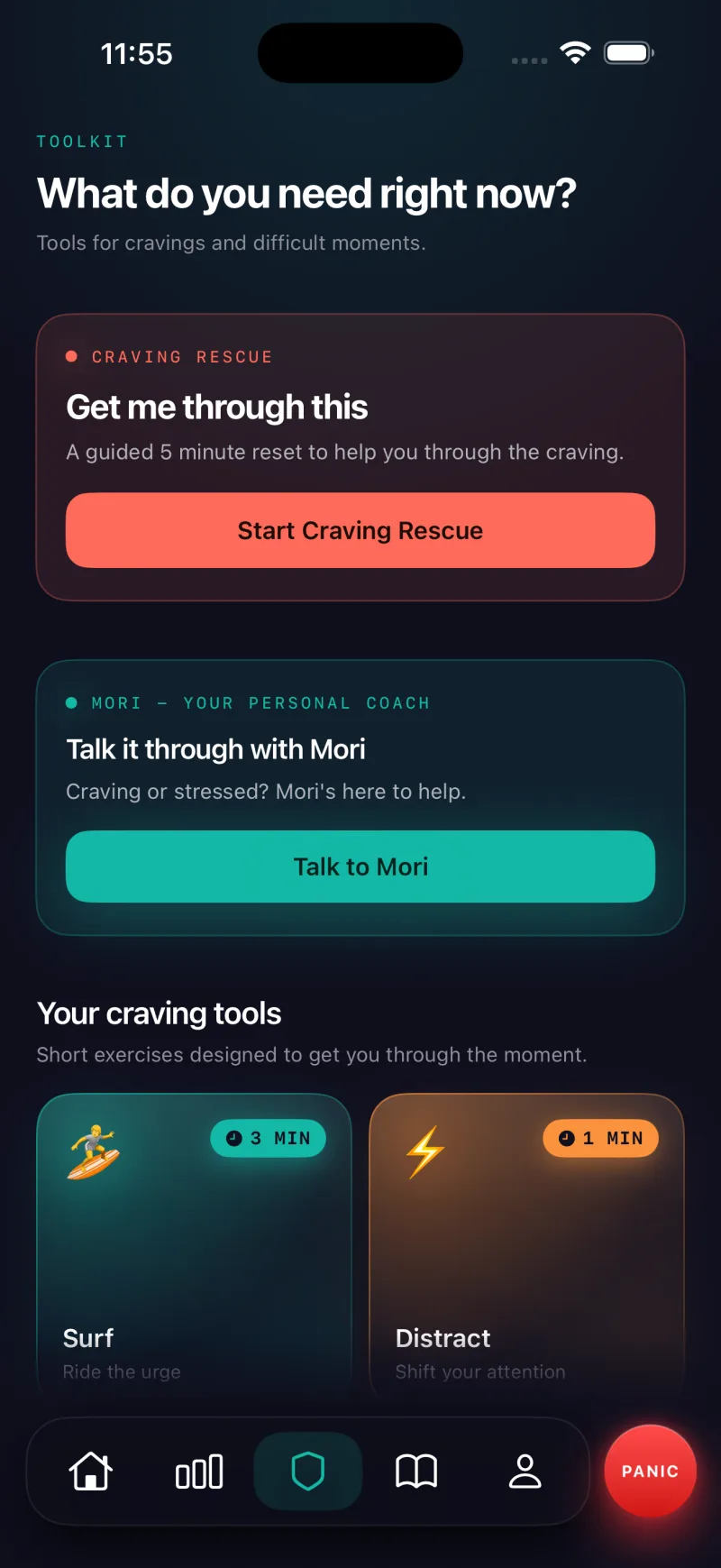
- Progress tracking apps — visual progress reinforces the identity shift from "smoker trying to quit" to "non-smoker."
Withdrawal is temporary, predictable, and survivable. The peak lasts 72 hours. Most physical symptoms are gone within a week. The brain fully recalibrates within a month. Every craving you outlast makes the next one weaker. You are not fighting forever — you are fighting for three days.
Frequently Asked Questions
How long does nicotine withdrawal last?
Physical symptoms typically resolve within 2–4 weeks. The acute peak lasts 48–72 hours. Some people experience milder psychological cravings for months, particularly in high-trigger situations, but these fade significantly over time.
Is it normal to feel worse before you feel better?
Yes, entirely. The body is recalibrating without a substance it has become chemically dependent on. Days 2–3 are measurably the hardest for most people. After day 3, the trajectory is reliably upward.
Can exercise actually reduce cravings?
Yes — multiple randomised controlled trials have shown that moderate aerobic exercise reduces craving intensity in the moment and improves long-term quit rates. Even a short walk works within minutes.
What's the difference between physical and psychological cravings?
Physical cravings are driven by neurochemical need — your brain's receptors signalling for nicotine. These dominate in the first week. Psychological cravings are habit-driven — the brain associating cigarettes with specific triggers (coffee, stress, social settings). These persist longer but become progressively weaker as new habits form.
This article is general information, not medical advice. Nicotine replacement and stop smoking services can significantly improve your chances of quitting. In the UK, free support is available through the NHS. Speak to your GP or pharmacist about what's right for you.